


Overview
About the African Energy Commission
The African Energy Commission (AFREC)is a specialised energy agency of the African Union which was established by African Heads of States and Governments in 2001, mandated to develop, coordinate and support the integration and transformation of Africa’s energy sector. AFREC works with African Union Member States and regional institutions across areas including energy information and statistics, energy efficiency, renewable energy, energy transition, energy planning and capacity development.
Mandate
- Policy Development and Harmonisation
Develop, coordinate, harmonise, and recommend energy policies, strategies, programmes, and plans in line with national, sub-regional, regional and continental priorities. - Energy Data, Information and Knowledge Management
Establish, maintain and continuously update a continental energy database, while promoting the collection, harmonisation, exchange and rapid dissemination of reliable energy information among Member States and Regional Economic Communities. - Capacity Building and Technical Assistance
Strengthen human and institutional capacity in the energy sector through training, technical assistance, feasibility studies and advisory support to Member States, RECs and other energy stakeholders. - Resource Mobilisation and Energy Project Development
Mobilise financial and technical resources and support the development of viable energy projects, including feasibility studies and assessment of their environmental impacts. - Energy Resource Development, Diversification and Value Addition
Promote the optimal, complementary and sustainable exploitation of Africa's energy resources, including the development of renewable and new energy sources and increased value addition to energy resources within Member States. - Regional Energy Integration, Trade and Market Development
Promote energy trade and transit among Member States, identify and remove barriers to regional energy markets, and support mechanisms for efficient energy pricing and trading. - Research, Innovation and Standards
Encourage research, development and innovation in the energy sector and promote the adoption of harmonised energy standards, procedures and systems across the continent. - Environmental Sustainability and Energy Efficiency
Promote effective measures to prevent and reduce environmental pollution associated with the exploitation, transportation, storage, distribution and use of energy resources, while advancing sustainable and efficient energy development
Programmes
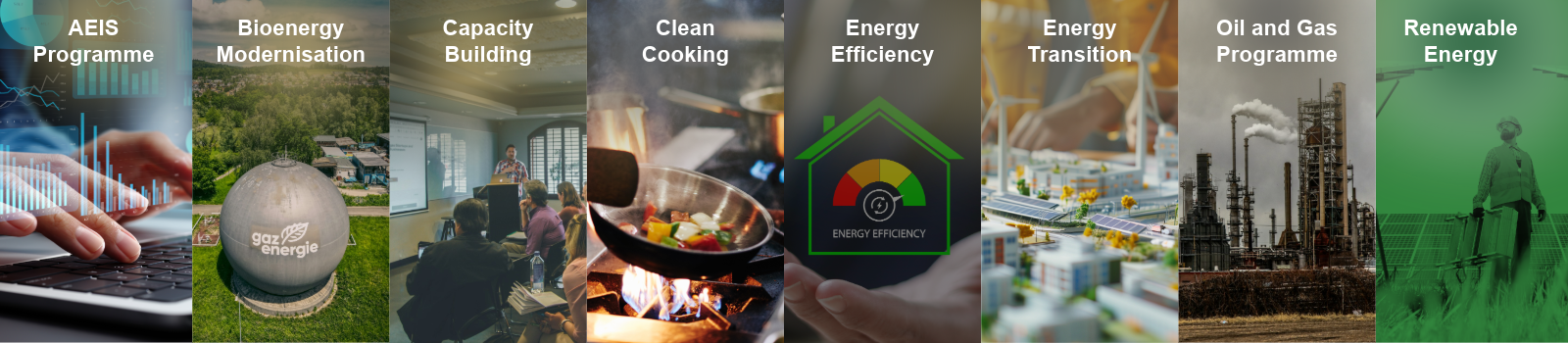
AFREC currently works across eight core programmes to execute its mandate:
- Energy Information Systems and Statistics (EISS)
- Energy Efficiency
- Energy Transition
- Bioenergy Modernisation
- Clean Cooking
- Renewable Energy
- Oil and Gas
- Capacity Building
History

The African Energy Commission (AFREC) was created by Decision AHG/Dec.167 (XXXVII) at the 37th Summit of the OAU Heads of State and Government, held in Lusaka, Zambia, on 11 July 2001.
AFREC was officially launched in Algiers, Algeria, in February 2008 by African Ministers responsible for Energy through the Algiers Declaration. The launch was subsequently endorsed by the African Union Executive Council at its 13th Ordinary Session in Sharm El Sheikh, Egypt, in June 2008 (Decision Ex.CL/Dec.432 (XIII)).
Since its establishment, AFREC has evolved into the African Union's specialised agency for energy, working to support Member States in developing and coordinating Africa's energy sector, strengthening energy cooperation and advancing continental energy priorities.
Convention status: Of the 46 Member States that have signed the AFREC Convention, 35 have ratified and deposited the Convention, while ratification by the remaining signatories is ongoing
Governance Structure
To ensure effective implementation of its mandate, AFREC is governed by a formal structure as articulated in the AFREC founding convention. The governing structure consist of the Conference of Ministers which is now represented by a specialised technical Committee (STC) on Transport, Transcontinental and interregional Infrastructure, Energy and Tourism (STC-TTIIET), the Executive Board, the Secretariat and the Technical Advisory Body.
Conference of Ministers
The Conference of Ministers is AFREC’s highest decision-making authority. Its role is currently fulfilled by the Specialised Technical Committee on Transport, Transcontinental and Interregional Infrastructure, Energy and Tourism (STC-TTIIET), comprising African Ministers responsible for these sectors. The Committee meets every two years to set strategic policy direction, approve AFREC’s work programmes and review implementation and performance.
The Executive Board
The AFREC Executive Board comprises 15 senior energy experts representing Member States, Regional Economic Communities (RECs) and Pan-African institutions. Elected by the Conference of Ministers on the basis of regional representation, members serve two-year terms. The Board meets annually and reports to the Conference. It oversees AFREC’s work by reviewing and submitting work programmes, studies, projects, activity reports and the annual budget for consideration and approval. The Executive Director serves as Secretary to the Board.
Technical Advisory Body
AFREC Technical Advisory Body is consultative forum which provide advisory and technical assistance to AFREC on energy policies, programmes, projects and related activities. Technical Advisory Body comprise of representatives of Pan African and selected International Institutions
The Secretariat
The AFREC Secretariat, headed by the Executive Director and assisted by the necessary staff, manages the Commission’s day to day operations and provides secretariat services to its governing organs. It also conducts studies, collects and analyses energy data and information, and convenes meetings, expert panels, symposiums, and other activities required to implement AFREC’s work programmes and decisions of the Conference or the Executive Board.
